March 22, 2026 at 12:00 PM UTC
America's allies are burning — and Washington lit the match
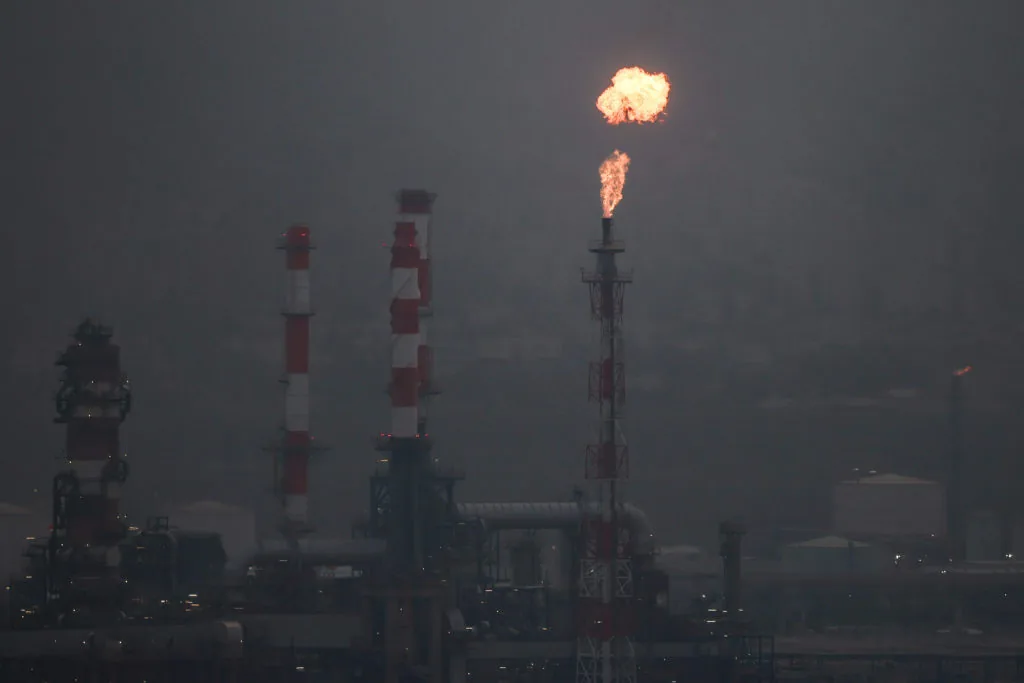
The scorecard of an ally
Three weeks into a war launched to protect US and Israeli interests in the Middle East, here is what America's closest regional allies have received in return:
Qatar — the host of Al Udeid Air Base, the largest US military installation in the Middle East and CENTCOM's forward headquarters — watched Iranian missiles tear into its Ras Laffan Industrial City, the heart of the country's energy sector. QatarEnergy declared force majeure. 17% of Qatar's LNG export capacity — 12.8 million tons per year — is offline. Repairs will take three to five years. Estimated lost revenue: $20 billion annually. Qatar responded by expelling Iran's military attaches within 24 hours. But the damage is done — and it was made possible by a war Qatar never asked for.
Kuwait — home to Camp Arifjan, Ali Al Salem Air Base, and Camp Buehring, where thousands of US troops are stationed — saw two waves of Iranian drones strike the Mina Al-Ahmadi refinery, one of the largest in the Middle East, capable of processing 730,000 barrels per day. Fires broke out. A second Kuwaiti refinery was also hit.
Saudi Arabia — America's oldest Gulf partner — had its SAMREF refinery in the Red Sea port of Yanbu struck by Iranian missiles.
The UAE — host of Al Dhafra Air Base and a pillar of US force projection — says it has been targeted by more than 2,000 Iranian drones and missiles since the war began. And three Amazon Web Services data centers — two in the UAE and one in Bahrain — were struck by IRGC drones, marking the first known military strikes on a US hyperscaler's infrastructure in history.
These are not enemies. These are allies. And they are paying for a war they did not start, did not authorize, and cannot stop.
Iran is not bluffing — the evidence
Washington's 48-hour ultimatum assumes Iran will blink. The last three weeks suggest otherwise.
When Israel struck Iran's South Pars gas field — which supplies 80% of Iran's domestic natural gas — Iran did not issue a press release. It launched missiles at Ras Laffan in Qatar, two refineries in Kuwait, and a refinery in Saudi Arabia within hours. The message was structural: touch our energy, we touch everyone's energy.
When Israel attacked Iran's Natanz nuclear enrichment complex on March 21, Iran responded that same night by striking towns near Israel's Dimona nuclear research center — the Shimon Peres Negev Nuclear Research Center. At least 180 people were wounded in Dimona and nearby Arad. Israel's military admitted it was not able to intercept the Iranian missiles. The IAEA confirmed no radiation leak — but the symbolism was unmistakable. Iran can reach Dimona. And Israel's air defenses, the most celebrated in the world, failed to stop it.
Iran has also struck AWS data centers in the UAE and Bahrain — not as collateral, but as deliberate strategic targeting. Iranian state media explicitly cited Amazon's contracts with the US military as justification. Fortune called it "a harbinger of new tactics in future conflicts." The attacks forced banking, payment systems, delivery apps, and enterprise software offline across the Gulf. Submarine cables through the Strait of Hormuz and the Red Sea — carrying the vast majority of data traffic between Europe, Asia, and Africa — are now in active conflict zones.
This is not a country that issues empty threats.
The alliance credibility crisis
Every Gulf capital is now doing the same calculation: What is the value of an American security guarantee?
For decades, the bargain was simple. Gulf states hosted US bases, bought American weapons, priced oil in dollars, and in return received the implicit promise that Washington would protect them — or at the very least, not make them targets. That contract is now shredded.
The US launched a war from bases in Qatar, Kuwait, Bahrain, and the UAE — and Iran retaliated against those exact countries. Washington's response? Demand NATO and China come help. NATO said no. China said stop. The Gulf states said "a price must be paid" — but have not retaliated, because retaliating against Iran means deeper involvement in a war they never wanted.
Germany's defense minister said it plainly: "This is not our war. We have not started it." The Gulf states are thinking the same thing. They just can't say it out loud while American jets are still parked on their runways.
The economic self-destruction
The damage to the US economy is not hypothetical. It is already here:
- Brent crude peaked at $126/barrel — the largest energy disruption since the 1973 oil embargo
- The Dallas Fed projects US GDP growth falling by 2.9 percentage points in Q2 2026
- The IEA released 400 million barrels from strategic reserves — an unprecedented drawdown that buys time but solves nothing
- AWS lost three data centers in a region that anchors cloud infrastructure for the entire Middle East, South Asia, and parts of Africa
- Qatar's LNG outage will raise European and Asian natural gas prices for years — at a time when Europe is still weaning itself off Russian gas
- The Pentagon is requesting an additional $200 billion for the war — money that will not go to infrastructure, healthcare, housing, or any of the things Americans were promised
And the long-term cost is worse. Every sovereign wealth fund in the Gulf is now reassessing its US exposure. Every defense ministry is asking whether American equipment — and the alliance that comes with it — is worth the risk. Saudi Arabia's Vision 2030, the UAE's AI ambitions, Qatar's LNG expansion — all of these assumed a stable, predictable American partner. That assumption died on February 28.
What this means
Iran's threat to destroy "all energy, information technology, and desalination infrastructure" in the region is not rhetoric. They have already hit LNG plants, oil refineries, data centers, and military-adjacent targets across four countries. They struck Dimona and Israel couldn't stop it. They have held the Strait of Hormuz for three weeks against the most powerful navy on earth.
If Trump follows through on his ultimatum and strikes Iran's power grid, the retaliatory target list is not a mystery. Iran has published it. And they have spent three weeks proving they can execute it.
The United States built its hegemony on two pillars: military credibility and alliance reliability. This war is destroying both. America's allies are not being protected — they are being used as forward operating bases and then abandoned to absorb the consequences. The Gulf states know it. NATO knows it. China knows it. And soon enough, every country that ever considered aligning with Washington will know it too.
The cost of this war is not just measured in barrels and billions. It is measured in the decades of trust that are burning alongside Kuwait's refineries.
SOURCES
- REPORTINGAl Jazeera
- REPORTINGCNBC
- ANALYSISFortune
- REPORTINGAl Jazeera
- REPORTINGPBS News
- ANALYSISRest of World
- ANALYSISThe Conversation
- REPORTINGNPR
If this matters, share it. The algorithm buries what it can't monetize.
Share on X
One post can reach thousands. Make it count.
Follow for updates