March 22, 2026 at 06:00 AM UTC
Shield cracked, truth censored — Israel's air defenses and information controls face reckoning as Iran's missiles reach Dimona
The sky is not sealed
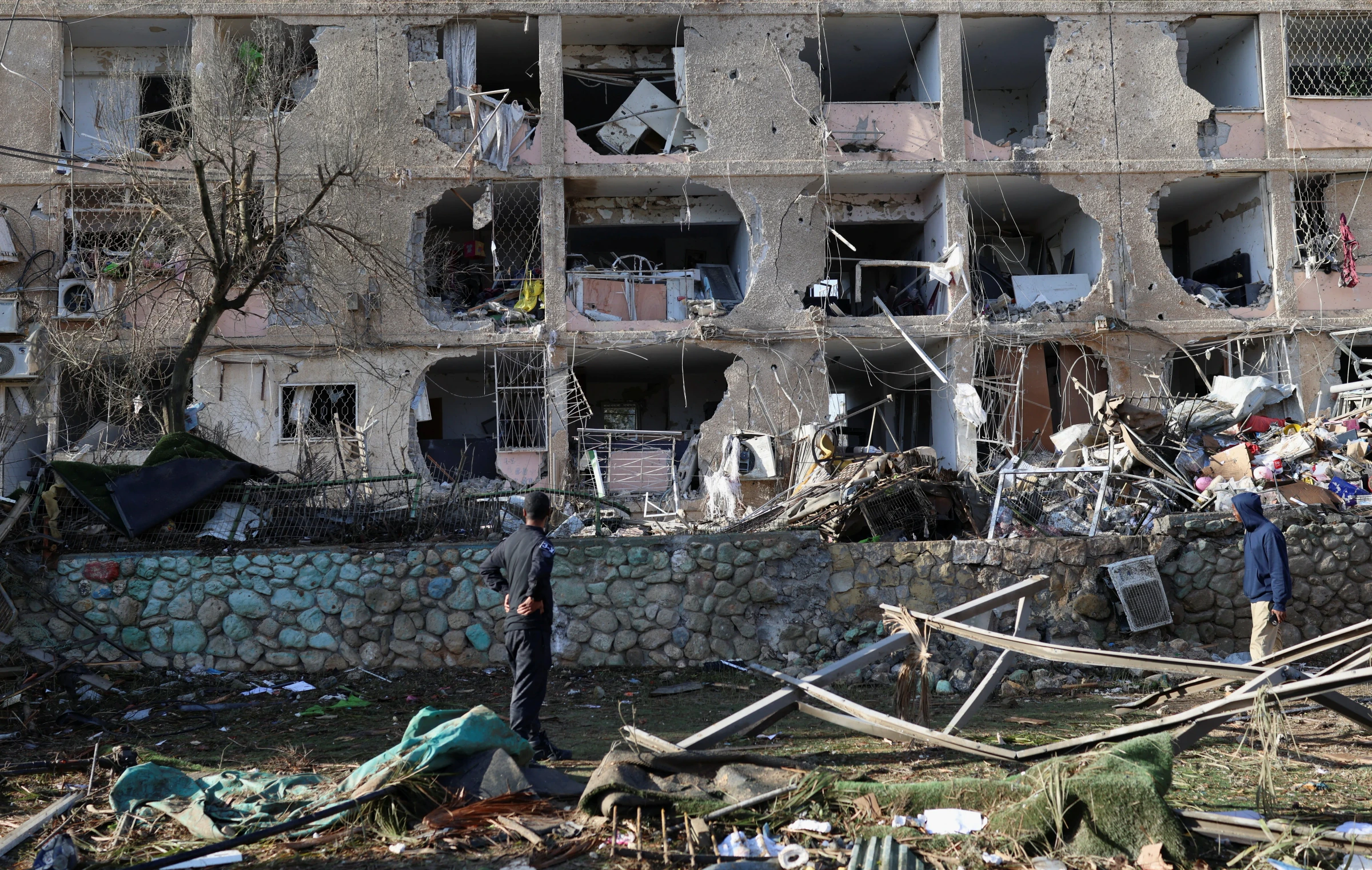
On the night of March 21, 2026 — day 22 of a war launched without congressional authorization — Iranian ballistic missiles punched through Israel's multi-layered air defense network and struck the southern cities of Dimona and Arad. At least 180 people were wounded, including seven critically in Arad and one in serious condition in Dimona. Multiple residential buildings were destroyed.
The strikes landed within range of Israel's most sensitive strategic asset: the Shimon Peres Negev Nuclear Research Center — the undeclared heart of Israel's nuclear weapons program, built secretly with French assistance in 1958, never submitted to IAEA inspection, and the reason Mordechai Vanunu spent 18 years in prison for telling the truth about it.
It was the first time Iranian missiles had penetrated air defenses in the area around the nuclear site.
The Israeli military acknowledged the failure plainly. A spokesman stated that "air defence systems were activated but failed to intercept some of the missiles, even though they were not special or unfamiliar." Two direct hits by ballistic missiles with warheads weighing hundreds of kilograms. The IAEA confirmed no damage to the reactor itself and no abnormal radiation levels — but the message from Tehran was unmistakable: we can reach what you cannot afford to lose.
Prime Minister Netanyahu called it "a very difficult evening in the battle for our future." That much, at least, was not censored.
Twenty-three days of cracking shields
Israel's air defense architecture is the most expensive and layered in the world. Iron Dome intercepts short-range rockets at $40,000–$80,000 per interceptor. David's Sling handles medium-range threats at roughly $1 million per shot. Arrow 2 and Arrow 3 — the crown jewels — intercept ballistic missiles in the upper atmosphere at $2.5–$3 million each.
The system was designed to be nearly impenetrable. For 23 days, Iran has been proving it is not.
The overall interception rate has hovered around 85% — a number that sounds reassuring until you do the arithmetic. Iran has fired over 500 ballistic missiles and nearly 2,000 drones since February 28. At 85% interception, that means 75 ballistic missiles got through. Each one carrying hundreds of kilograms of high explosive.
The deadliest single failure came on March 1 — the first full day of Iranian retaliation. A ballistic missile struck a communal shelter in a synagogue in Beit Shemesh, 29 kilometers from Jerusalem. Nine civilians were killed, including three teenage siblings — Yaakov (16), Avigail (15), and Sarah (13) Bitton. Twenty-eight others were wounded. At least two interceptors had been launched against that missile. Both missed.
The interception rate has not held steady. During the June 2025 Twelve-Day War, Israel maintained roughly 90% interception. By March 2026, it had dropped to 65% during some 24-hour periods — a catastrophic decline that analysts attribute to one factor above all others: Israel is running out of interceptors.
The economics of attrition
This is Iran's strategy, and it is working.
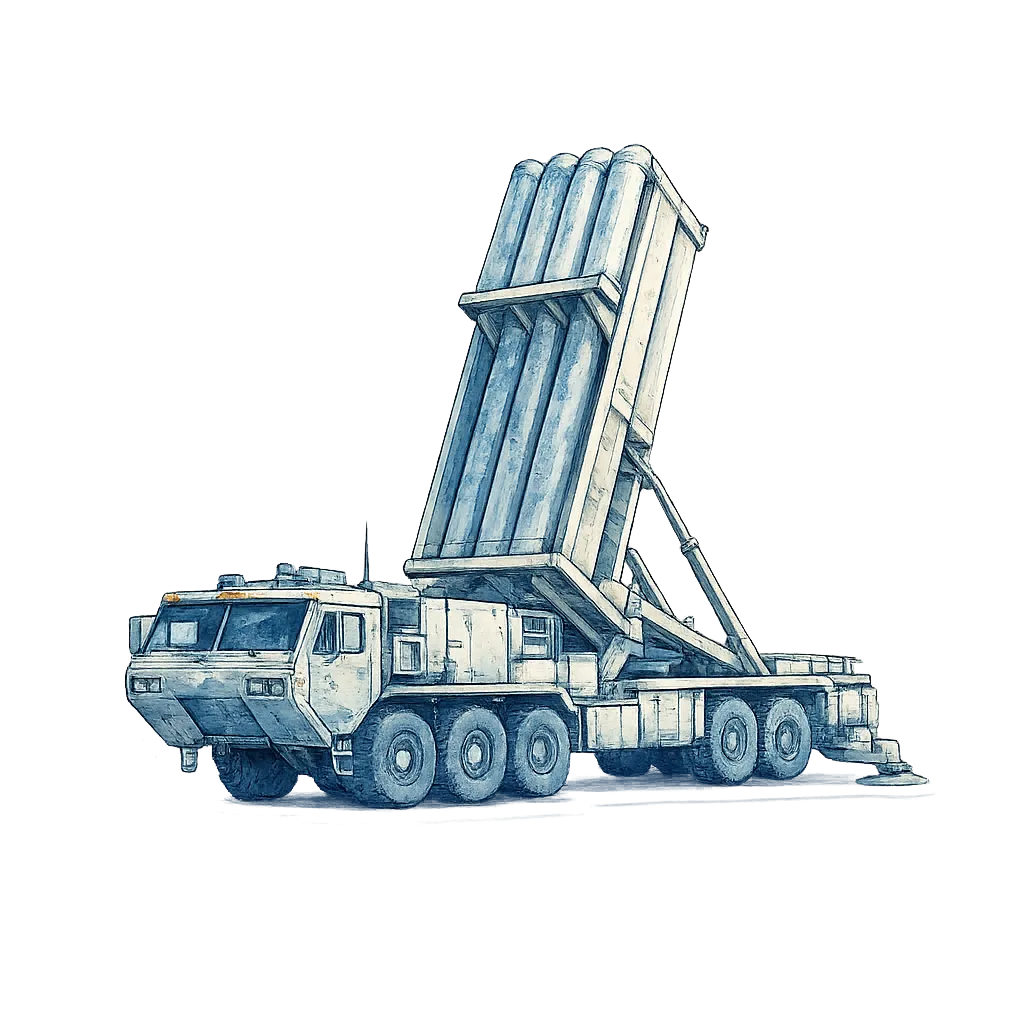
Semafor reported on March 14 that Israel informed the United States it is "running critically low" on ballistic missile interceptors. Arrow 3 — the only system capable of intercepting Iran's long-range ballistic missiles in the exoatmosphere — has consumed an estimated 60–70% of available rounds. The United States has rushed additional missile defense assets to the region, including guided missile destroyers armed with SM-2, SM-3, and SM-6 interceptors, and ground-based THAAD systems.
But the fundamental asymmetry remains. An Iranian ballistic missile costs a fraction of the interceptor required to destroy it. Iran's cluster munitions — which disperse submunitions that each require separate interception — multiply the cost differential further. A single Iranian missile carrying cluster warheads can force Israel to expend dozens of interceptors.
Tehran calls this doctrine "attrition through abundance." Saturate the defenses with volume, decoys, and maneuverable payloads. Force the enemy to spend millions per engagement while you spend thousands. Wait for the inventory to run dry.
The Arrow system cannot be easily backfilled. These are not off-the-shelf munitions — each interceptor requires months of production. Shortages in Arrow cannot be compensated by other defense layers, because Iron Dome and David's Sling are not designed for long-range ballistic threats. When Arrow runs out, the sky over Israel is functionally open.
Iran has also deployed what it claims are hypersonic missiles — weapons that travel at speeds and trajectories that dramatically reduce the time available for interception. Whether Iran's "Fattah" series represents genuine hypersonic capability or enhanced maneuvering reentry vehicles is debated, but the effect is the same: Israeli systems are tracking objects they were not optimized to intercept.
The nuclear equation
The targeting of Dimona is not random. It is a message encoded in coordinates.
Israel maintains a policy of "strategic ambiguity" — neither confirming nor denying its nuclear arsenal. The Dimona facility, built outside the international nonproliferation framework, is estimated to have produced material for 80–400 nuclear warheads depending on the source. Israel has never signed the Nuclear Non-Proliferation Treaty. The facility has never been subject to comprehensive IAEA safeguards.
The March 21 strikes on Dimona came on the same day that the United States attacked Iran's Natanz nuclear enrichment complex. The symmetry was deliberate. Tehran's IRGC statement made this explicit: the strikes were a "response" to the Natanz attack.
What we are witnessing is a tit-for-tat escalation between nuclear facilities — a category of targeting that has no precedent in modern warfare. The United States bombs Iran's enrichment infrastructure. Iran retaliates by demonstrating it can strike the perimeter of Israel's weapons production site. Each round raises the threshold of what is considered acceptable.
The IAEA says no damage to the reactor. But the missiles landed in the towns where the facility's workers live. The next salvo may not be aimed at the towns.
Iran's strategic posture — the attacked party that won't stop shooting
Washington claimed on March 16 that it had "functionally destroyed" Iran's missile capacity. Iran responded by firing missiles at Dimona five days later.
The Pentagon's assessment — that Iran's offensive capability was eliminated in the opening days — has been contradicted weekly since it was made. The reason is structural: Iran's missile infrastructure was designed for survivability.
Mobile launchers — truck-mounted transporter-erector-launchers — were dispersed before the first strike landed. Pre-positioned reserves in hardened mountain tunnels survived the initial bombing campaign. Decentralized command authority meant that the killing of Khamenei and 30 senior leaders on February 28 did not decapitate Iran's retaliatory capacity. The IRGC's missile command appears to operate on a delegated launch authority model — the order to retaliate was pre-authorized.
Iran's Shahed-136 drones — cheap, GPS-guided, and producible in large quantities — serve as the low end of the saturation strategy. They are not meant to penetrate defenses alone. They are meant to force Israel to expend interceptors on $20,000 drones so that the $500,000 ballistic missiles behind them have a clearer path.
And then there is the Strait of Hormuz. Iran's naval forces have effectively blockaded the strait, reducing tanker traffic by 70%. Oil prices have surged from $72 to over $106 per barrel. US gasoline prices have jumped from $2.98 to $3.93 per gallon. The Dallas Federal Reserve estimates the Hormuz disruption has cut global GDP growth by 2.9 percentage points.
Iran's strategy is not merely military. It is economic, logistical, and temporal. Every day the war continues, Israel's interceptor inventory shrinks, the global economy bleeds, and the political cost of the war rises. Tehran is betting it can absorb more punishment than Israel can inflict — and that the world's tolerance for $100 oil is shorter than Iran's tolerance for bombardment.
The censorship machine
You might expect that a country losing the air defense battle would be the subject of intensive scrutiny. You would be wrong. Israel operates one of the most sophisticated media censorship apparatuses of any democracy — and since February 28, it has been running at full capacity.
The Tsenzura
Israel's military censor — known colloquially as the "Tsenzura" — is not a wartime improvisation. It is a permanent institution, established under the British Mandate-era Defence (Emergency) Regulations of 1945 and never repealed. Every media outlet operating in Israel, domestic or foreign, is legally required to submit material touching on security matters to the censor for review before publication.
In peacetime, the censor reviews approximately 2,240 articles per year. Since the war began on February 28, the rate has quadrupled. Based on reporting by The Intercept, approximately 6,500 items have been censored in less than four weeks — a pace that suggests the censor's office has been significantly staffed up.
An unclassified directive published on March 5 instructed journalists to submit anything related to:
- Operational matters and military planning
- Intelligence information
- Defensive preparedness
- Impact sites in Israel — where missiles actually hit
- Armament management — including interceptor stockpiles, aircraft readiness, and classified weaponry
- Operational vulnerabilities in defense and offense
The most consequential of these is the ban on reporting impact sites. When an Iranian missile strikes a residential building in Dimona, journalists on the ground cannot report the precise location, cannot photograph the damage in a way that reveals where it happened, and cannot publish until the censor clears the material. The effect is that Israelis learn their country was hit — but not where, not how badly, and often not how many were hurt.
The information gap
This produces a measurable gap between reality and the public record.
On March 21, Iranian missiles struck Dimona and Arad, wounding 180 people. Tehran claimed more than 200 were killed. Israel reported zero deaths. The actual number is unknowable from public sources — but the gulf between "200 killed" and "zero killed" in an attack that destroyed multiple residential buildings and wounded 180 invites scrutiny that the censorship system is designed to prevent.
Media outlets report a recurring pattern: receiving official statements that there were "no strikes or damage" in a given area, only to discover later that a target was indeed hit — but they cannot report or confirm this. The censored reality is replaced by a curated one.
On March 11, Hezbollah launched its most intense volley of rocket fire since the war began — a second front that has killed over 1,000 people in Lebanon and displaced 1 million. Israeli media outlets knew about the incoming barrage in advance but were barred from publishing the story until the censor cleared it. The delay was not seconds. It was hours.
Controlling the foreign press
The censor focuses particular attention on international media. Since the Knesset declared a "special situation on the home front" at the war's outset — invoking emergency powers that expand military and government authority over communications — foreign journalists have faced escalating restrictions.
Israeli far-right Minister of National Security Itamar Ben Gvir has publicly vowed to "act with severity and zero tolerance" against international media that violate censorship rules. Police have been dispatched to detain journalists; multiple international crews have been dispersed in Haifa despite following accreditation rules. France 24 reported journalists facing "restrictions and detention" across the Middle East, with Israel among the primary offenders.
CNN has not submitted any video to the censor for review since the war started — effectively choosing not to broadcast sensitive material rather than submit to pre-publication review. This is self-censorship by institutional choice, and it is exactly what the system is designed to produce.
The Committee to Protect Journalists has documented press freedom violations across the region since the war began, with Israel featuring prominently. At least three journalists have been killed covering the conflict, eight or more injured, and 15 imprisoned — several in Evin Prison, which itself sits in an area designated as an Israeli evacuation zone.
The digital front
The censorship extends far beyond traditional media.
Meta — the parent company of Facebook and Instagram — has compiled a remarkable record of compliance with Israeli government requests. According to internal data leaked by whistleblowers and reported by DropSite News, Meta has complied with 94% of takedown requests issued by the Israeli government since October 2023, resulting in over 90,000 immediate content removals. An additional 38.8 million posts have been "actioned upon" through automated systems.
Human Rights Watch investigated 1,050 of these takedowns and found that 1,049 were peaceful pro-Palestinian content — not terrorism, not incitement, not any of the categories that Meta's policies nominally target. Yet 95% of Israeli government requests were labeled as "terrorism" referrals.
The average response time for Meta to comply with an Israeli government takedown request: 30 seconds.
Since the Iran war began, these mechanisms have expanded. X (Twitter) has broadly cracked down on conflict-related content. The UAE has threatened one year of imprisonment for sharing attack footage. Bahrain arrested four people for sharing videos of strikes. Iran itself has reduced internet access to 1% of normal capacity and criminalized filming of strike sites.
The result is an information environment in which every party to the conflict is actively suppressing documentation of what is happening. But Israel's censorship is distinctive because it operates within a nominally democratic framework, with the compliance of Western technology companies, and with the legal architecture of a permanent emergency that has persisted since 1945.
Historical pattern
This is not new. It is intensified.
Israel censored Mordechai Vanunu's nuclear revelations for years before the Sunday Times published them in 1986. The Prisoner X affair — in which an Australian-Israeli Mossad agent died in secret custody — was suppressed for two years under gag orders. The Anat Kamm leak case was placed under a gag order that prevented Israeli media from reporting on a story that was already published internationally. Israel's 2007 strike on a Syrian nuclear facility was censored domestically for months.
Gag orders have tripled over the past 15 years, according to the Reuters Institute. Judges approve them "almost automatically" in ex parte proceedings — meaning the media outlet being gagged is not present and cannot argue against the order.
In April 2024, the Knesset passed a law enabling the government to shut down Al Jazeera's operations in Israel — the first time a democracy had legislated the closure of a specific news outlet since the end of apartheid-era South Africa.
The war has not created Israel's censorship apparatus. It has simply given it permission to operate at full power.
What is being hidden
The convergence of air defense failure and information control creates a specific danger: the public cannot assess whether the war is being won or lost.
Israel's official casualty count — 18 killed, 3,730+ wounded in 23 days — may be accurate. Or it may not. The censorship system is specifically designed to prevent independent verification. Impact sites cannot be reported. Casualty figures pass through military channels before reaching the public. The gap between Iranian claims of 200+ dead in the Dimona strikes and Israel's report of zero dead is not adjudicable from available evidence — and that is the point.
Meanwhile, the interceptor crisis — Israel's most acute strategic vulnerability — is being discussed in Semafor, the Calcalist, and by US officials speaking to American journalists, but it is formally censored within Israel itself. Israeli citizens cannot read, in their own media, the full scope of reporting available to readers of American defense publications.
This is the architecture of managed perception. The sky is cracking. The public is told it holds. The missiles land. The censor reviews the footage. The world sees what is approved.
Twenty-three days into a war that no one voted for, the question is not only whether Israel's Iron Dome can hold. It is whether anyone will be allowed to report honestly when it doesn't.
SOURCES
- PRIMARYAl Jazeera— 180 wounded in Dimona/Arad strikes, first penetration of defenses near nuclear site
- REPORTINGAl Jazeera— Day 23 comprehensive developments, Trump ultimatum
- PRIMARYAl Jazeera— Beit Shemesh strike killing 9 including 3 teenage siblings
- PRIMARYSemafor— Exclusive: Israel critically low on interceptors
- PRIMARYThe Intercept— Eight banned topics, censorship directive, 6,500 items censored
- REPORTINGCNN— How international outlets operate under military censor
- REPORTINGCommittee to Protect Journalists— Press freedom violations, journalist arrests and killings
- ANALYSISHuman Rights Watch— 1,050 documented takedowns, 1,049 were peaceful content
- REPORTINGDefence Security Asia— Arrow interceptor depletion crisis
- ANALYSISThe Conversation— Interceptor shortage analysis, cost asymmetry
- REPORTINGCBS News— Dimona/Arad strike confirmation, casualty figures
- REPORTINGTimes of Israel— Beit Shemesh strike details from Israeli perspective
- ANALYSISReuters Institute— Gag orders tripled over 15 years, judicial rubber-stamping
- REPORTINGFrance 24— Journalist restrictions and detentions during Iran war
- ANALYSISEurasian Times— Interception rate decline from 90% to 65%
If this matters, share it. The algorithm buries what it can't monetize.
Share on X
One post can reach thousands. Make it count.
Follow for updates