March 7, 2026 at 12:00 PM UTC
Week One of Operation Epic Fury -- the balance sheet nobody asked for
What happened
At 7:00 AM Tehran time on Saturday, February 28, 2026, the United States and Israel launched what the Pentagon called a "single synchronized wave" -- a "massive, overwhelming attack across all domains" against Iran. President Trump announced it via an eight-minute video on Truth Social at 2:00 AM Eastern. No congressional vote preceded it. No declaration of war authorized it. By the time most Americans woke up, their country was at war with a nation of 88 million people.
The operation was codenamed Epic Fury. Israel called its parallel campaign Roaring Lion. In the first 12 hours alone, US and Israeli forces conducted nearly 900 strikes across more than 30 sites -- military bases, IRGC headquarters, missile installations, air defenses, and leadership compounds. The Pentagon deployed approximately 200 fighter aircraft (50 stealth, 110 conventional, 80 carrier-based), two carrier strike groups, 14 destroyers, and a fleet of B-2 stealth bombers.
By the end of Day Seven, the war had produced two balance sheets. One measured in dollars. The other in blood. Neither contained a line item for congressional authorization -- because there was none to record.
The blood ledger
The first American casualties came on March 1 -- three US service members killed, five seriously wounded. By March 2, the number of American dead had risen to six. The Pentagon did not release their names for 48 hours.
The Iranian toll was of a different magnitude entirely.
On the war's first day, the Shajareh Tayyebeh girls' elementary school in Minab, Hormozgan Province, was destroyed. The school sat adjacent to an IRGC facility that was among the day's targets. According to witness accounts verified by satellite imagery and later corroborated by investigations from the New York Times, BBC Verify, CBC, and NPR, the school was struck by what Amnesty International identified as a US-manufactured Tomahawk cruise missile -- a precision-guided weapon that costs $3.6 million per unit and is used exclusively by American forces in this conflict.
The school was hit three times. Triple-tapped.
Iranian authorities reported that 264 students were present at the time, mostly girls between seven and twelve years old. The death toll settled at approximately 175 people -- at least 110 of them children, along with 26 teachers and four parents. The Pentagon's own probe, leaked to CNN on March 11, concluded that US Central Command had created targeting coordinates using outdated intelligence provided by the Defense Intelligence Agency.
A $3.6 million missile. Outdated coordinates. One hundred and ten children.
The Minab strike was the single deadliest civilian casualty event of the war's first three weeks, but it was not an aberration. By March 3, the Iranian Red Crescent reported more than 600 civilians killed. The Human Rights Activists in Iran network put the figure at 742. By Day Seven, credible estimates placed the total Iranian dead -- military and civilian combined -- between 1,200 and 1,300, with civilian casualties accounting for roughly 500-700 of that number.
UN human rights experts condemned the strikes as "flagrant violations of international law," describing the offensive as "entirely illegal" and constituting "an act of aggression." UNESCO called the school bombing "a grave violation of humanitarian law." Human Rights Watch demanded a war crimes investigation. Amnesty International said those responsible "must be held accountable."
The Pentagon called it a "tragic incident" and announced a review.
The dollar ledger
War has a price tag. This one arrived fast.
The Center for Strategic and International Studies estimated the cost of the first 100 hours at $3.7 billion -- roughly $891 million per day. Of that, only $178 million was budgeted. The remaining $3.5 billion was effectively charged to a national credit card with no spending authorization from Congress.
The breakdown:
-
Munitions expended: ~$3.1 billion ($758 million per day). The US fired more than 2,000 munitions against approximately 2,000 targets. Tomahawk cruise missiles at $3.6 million each. JDAM guidance kits at $80,000 each. And on the defensive side, SM-2 and SM-3 interceptors burning through stockpiles to knock down Iran's retaliatory salvos.
-
Air operations: ~$125 million ($30 million per day). Two hundred aircraft cycling through sorties around the clock.
-
Naval operations: ~$64.5 million ($15.4 million per day). Two carrier strike groups, 14 destroyers, three littoral combat ships.
-
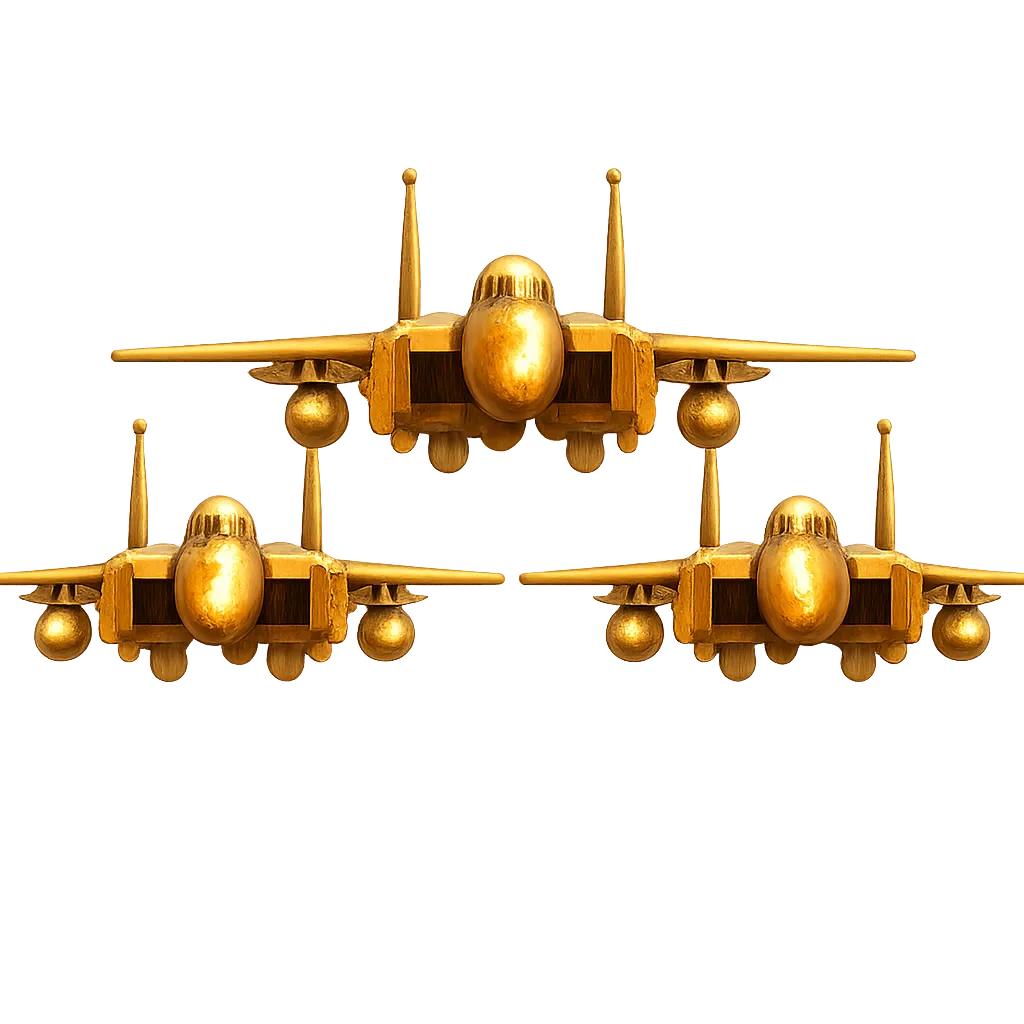
Equipment losses: ~$359 million. Three F-15EX fighters lost -- $103 million each.
By Day Six, the Pentagon briefed senators in a closed-door session that the cumulative cost had reached $11.3 billion. That figure represented only direct military expenditure -- not the economic shockwave radiating outward from the Persian Gulf.
To put $11.3 billion in seven days in perspective: the entire annual budget for the National School Lunch Program -- which feeds 30 million American children -- is $14.2 billion. The administration spent 80% of that feeding Tomahawks into Iranian concrete in less than a week.
The Pentagon subsequently sent a $200 billion supplemental funding request to the Office of Management and Budget. Congress -- which never authorized the war -- was now being asked to fund it.
The target
The stated objectives of Operation Epic Fury were fourfold: prevent Iran from acquiring a nuclear weapon, destroy its missile arsenal and production capability, degrade its proxy networks, and annihilate its navy. An unstated fifth objective -- regime change from within -- was barely concealed.
On the leadership front, the strikes achieved something immediate and irreversible. Supreme Leader Ali Khamenei was killed on the morning of February 28 in a targeted Israeli strike on a leadership compound in downtown Tehran. Also killed: IRGC Commander Mohammad Pakpour, Defense Minister Amir Nasirzadeh, Ali Shamkhani (adviser to the Supreme Leader), and Chief of Staff Mohammad Bagheri.
The decapitation was surgical. What followed was not.
Iran's military and political apparatus did not collapse. Within hours of Khamenei's death, the IRGC announced its "most intense offensive operation" was imminent. And they delivered.
Iran responds
By the end of the first week, Iran had fired over 500 ballistic and naval missiles and nearly 2,000 drones, according to Fars News Agency. The targets were not limited to abstraction. They were American bases, allied infrastructure, and the global economy itself.
Iranian retaliatory strikes hit US bases in Qatar, the UAE, Bahrain, Kuwait, and Iraq. Missiles landed near the US Embassy compound in Riyadh. On March 1, Hezbollah opened a second front, launching rockets into northern Israel for the first time since the November 2024 ceasefire.
But Iran's most consequential retaliation required no missiles at all.
On March 2, the IRGC officially declared the Strait of Hormuz closed. VHF radio warnings went out to every vessel in the waterway: no ships would be permitted to pass. Ship-tracking data showed a 70% reduction in traffic within hours. By March 4, Iran had begun laying naval mines. By March 8, the strait was effectively sealed.
Through the Strait of Hormuz flows 20% of the world's oil and 20% of global LNG. When you bomb the country that controls that chokepoint, the consequences are not theoretical. They are priced in at the pump.
The sinking of the IRIS Dena
On the morning of March 4, the US Navy submarine USS Charlotte -- a Los Angeles-class attack submarine -- fired two Mark 48 torpedoes at the Iranian Navy frigate IRIS Dena in the Indian Ocean, off the coast of Sri Lanka. One torpedo struck.
The Dena had approximately 180 crew members aboard, including members of the Iranian Navy band. The ship had just completed the International Fleet Review 2026 and the multinational naval exercise MILAN in Visakhapatnam, India -- exercises the United States had also attended. The vessel was reportedly lightly armed or unarmed at the time, configured for a diplomatic mission, not combat.
The blast killed at least 87 sailors. The Sri Lanka Navy rescued 32 survivors and transported them to Galle National Hospital. Over 60 remain missing.
It was the first time a US submarine had sunk an enemy warship with a torpedo since the Pacific theater of World War II. The first time any nuclear-powered submarine had torpedoed a surface vessel since the Royal Navy's sinking of the ARA General Belgrano during the Falklands War in 1982.
A historic milestone. Eighty-seven sailors dead. A ship that had been at a peace exercise the week before.
The price at home
Americans felt the war before they understood it.
Brent crude surged 10-13% to $80-82 per barrel by March 2. By March 8, it had broken $100 per barrel for the first time in four years. At its peak, it hit $126. The International Energy Agency called it the "greatest global energy security challenge in history."
Oil production across Kuwait, Iraq, Saudi Arabia, and the UAE dropped by 6.7 million barrels per day by March 10. The global price of energy -- food, shipping, manufacturing, heating -- began its climb.
At American gas stations, prices jumped more than 17% in ten days. Individual stations saw spikes of 85 cents per gallon. The Penn Wharton Budget Model estimated the total economic cost to the United States alone could reach $115 billion -- with a broader global impact of $210 billion.
No congressional vote authorized these costs. No budget appropriated them. They simply arrived -- like the war itself -- as a fait accompli.
Congress watches
The Constitution is clear: Congress declares war. The War Powers Resolution of 1973 is clear: the president must notify Congress within 48 hours of committing forces and cannot sustain operations beyond 60 days without authorization.
Neither mechanism functioned.
The Trump administration cited Article II commander-in-chief powers and claimed Iran's nuclear program posed an "imminent threat" -- the same elastic justification that has launched every unauthorized military action since Korea. On March 1, the Senate voted 53-47 to block a War Powers Resolution that would have curtailed the president's authority. Senator Rand Paul was the only Republican to support it. Senator John Fetterman was the lone Democrat to oppose it.
The House rejected a companion resolution 212 to 219.
So the war continued. Unauthorized but unfunded was not a problem the administration intended to solve with democratic process. It would solve it with a supplemental spending bill -- $200 billion, delivered to Congress as a demand, not a request.
Speaker Johnson called limiting the president's war authority "dangerous." The war itself, apparently, was not.
The world responds
The international reaction broke along predictable fault lines -- with a few notable fractures.
Russia condemned the strikes as a "reckless step" and a "deliberate, premeditated, and unprovoked act of armed aggression." By the end of the first week, reports emerged that Russian intelligence was sharing US military positions with Iran.
NATO Secretary General Mark Rutte said Europe was "supportive" of the strikes, calling Iran "a threat." EU Commission President Ursula von der Leyen and Council President Antonio Costa called the conflict "greatly concerning" and urged restraint -- the diplomatic equivalent of watching a building burn and suggesting someone call the fire department.
Turkey used the chaos to launch strikes against PKK targets in Iraq.
Pakistan erupted. Protests swept the country on March 1, primarily among Shia communities expressing solidarity with Iran. Between 26 and 35 protesters were killed and 120 injured by security forces.
In the United States, CodePink, the Democratic Socialists of America, and the National Iranian American Council organized demonstrations in multiple cities. Actress Jane Fonda joined anti-war protesters at a rally in Los Angeles.
The UN General Assembly had not yet convened an emergency session. The Security Council had not passed a ceasefire resolution. The International Criminal Court had not opened an investigation. All of these would come later. In Week One, the institutions designed to prevent exactly this kind of war were still finding their reading glasses.
The balance sheet
Seven days. Here is what America's unauthorized war purchased:
Spent:
- $11.3 billion in direct military costs
- 2,000+ munitions
- Three F-15EX fighters ($309 million)
- Global energy security (Strait of Hormuz closed)
- Constitutional war-making authority (bypassed)
Killed:
- 6 American service members
- 1,200-1,300 Iranians (500-700 civilians)
- 110+ children at a school in Minab
- 87 sailors on a frigate returning from a peace exercise
- 26-35 Pakistani protesters
Destabilized:
- Global oil markets (Brent crude: $72 to $126/barrel)
- American gas prices (up 17% and climbing)
- The Strait of Hormuz (20% of world oil supply)
- Lebanon (Hezbollah front reopened)
- The US Constitution's war powers framework
Gained:
- The death of Ali Khamenei and senior military leadership
- Destruction of known missile sites and nuclear facilities
- A $200 billion bill Congress never voted for
This is Week One. The war did not end at Week One. The costs -- human, financial, constitutional -- compounded from here.
No one asked for this war. $11.3 billion says someone decided to start one anyway.
SOURCES
- ANALYSISCSIS— Cost analysis of first 100 hours
- PRIMARYAl Jazeera— Live casualty tracker
- VERIFICATIONAmnesty International— Minab school attack investigation
- REPORTINGCNN— Pentagon probe on school strike using outdated intelligence
- REPORTINGNPR— Oil and gas price impact analysis
- PRIMARYMilitary.com— IRIS Dena sinking account
- VERIFICATIONHuman Rights Watch— War crimes investigation demand
- REPORTINGMiddle East Monitor— Cost tracking via Anadolu Agency
- REFERENCEWarCosts— Day-by-day conflict timeline
- PRIMARYUSNI News— First US casualties confirmed
If this matters, share it. The algorithm buries what it can't monetize.
Share on X
One post can reach thousands. Make it count.
Follow for updates